Warning Signs Your Tree May Be Sick or Unsafe
Fungus at the base, dead limbs, cracks, and leaning trunks can all mean trouble. What to look for and who to call.
Trees can decline slowly, and many problems are easy to miss until a limb falls or the whole tree leans. Knowing the common warning signs helps you catch issues early and get the right professional involved. One important note up front: diagnosing and treating tree disease is the job of a certified arborist. This guide is meant to help you notice symptoms, not to replace an expert assessment.
Fungus at the base or on the trunk
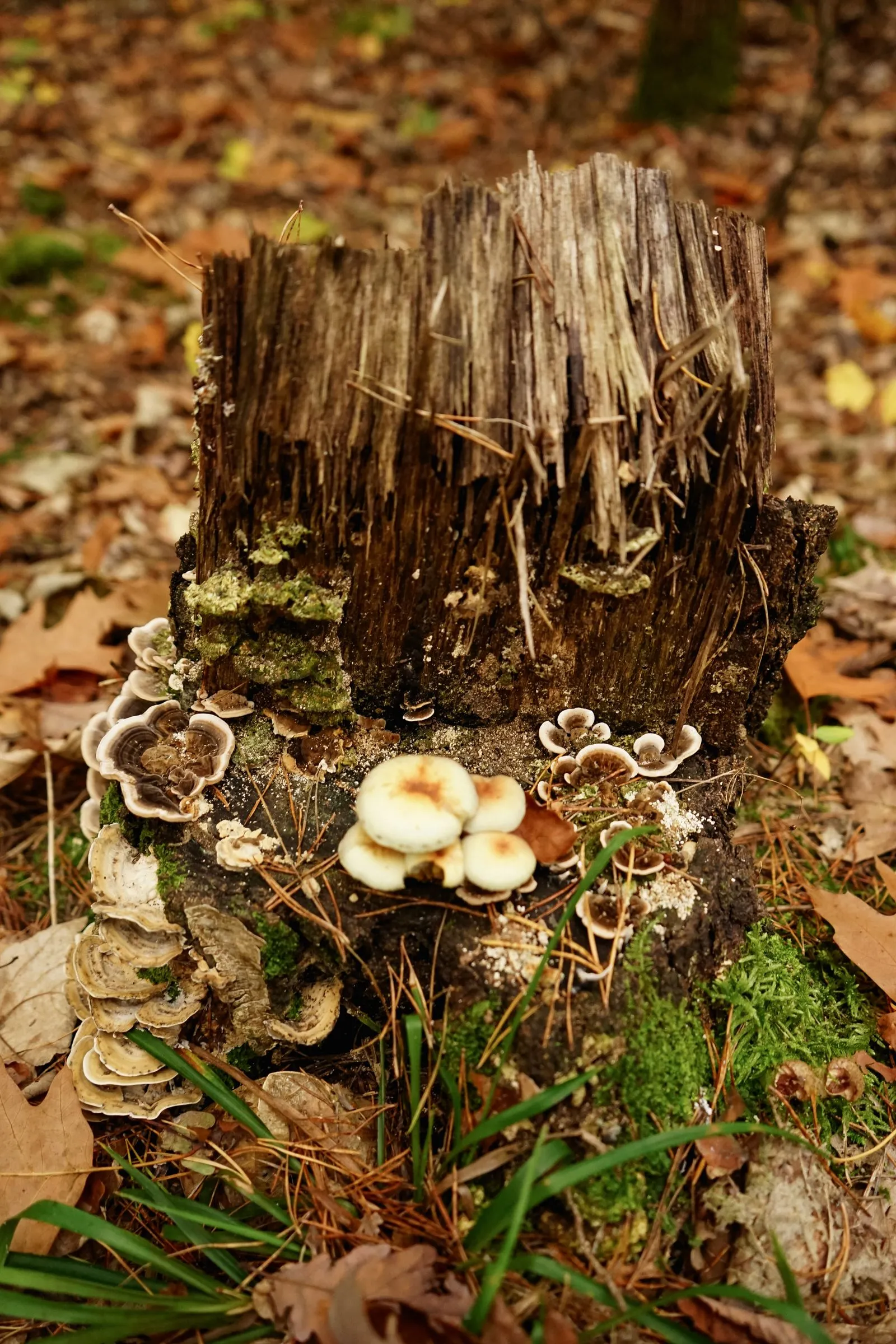
Mushrooms or shelf-like conks growing on the trunk or around the root flare can indicate internal decay. Fungi feed on dead wood, so their presence often means some portion of the tree has already been compromised. Not every mushroom near a tree is a problem, but fungal growth attached to the trunk deserves a professional look.
Dead or dying branches
Dead limbs, sometimes called deadwood, lack leaves in the growing season and often have bark that is cracked or falling away. A few small dead twigs are normal. Large dead branches, especially high in the canopy or hanging over a house, driveway, or play area, are a real hazard.
Cracks, cavities, and splits
Deep vertical cracks in the trunk, cavities where wood has rotted out, and splits where two large stems meet are all structural concerns. Trees with a tight V-shaped fork can be especially prone to splitting during wind or ice.
Changes in the canopy
Thinning leaves, early fall color, leaves that wilt or discolor out of season, and dieback starting at the branch tips can signal root problems, disease, or stress. Compare the tree to others of the same species nearby; if it looks noticeably worse, take note.
Root and soil warning signs
- Soil heaving or cracking on one side of the tree.
- A new or increasing lean.
- Roots that are visibly damaged by construction, trenching, or grade changes.
- Fungus or soft, crumbly wood at the root flare.
Bark and pest signs
Peeling bark in patches, oozing sap, small exit holes, or fine sawdust at the base can point to insect activity. Some boring insects attack trees that are already stressed, which makes them both a symptom and a cause of further decline.
What to do if you see these signs
Contact a certified arborist. Organizations such as the International Society of Arboriculture maintain directories of credentialed professionals. An arborist can assess whether the tree can be treated, pruned, monitored, or needs to come down for safety. If a tree is clearly unsafe, especially near structures or power lines, keep people away from it and call for help promptly. Never attempt to remove large limbs near power lines yourself; contact your utility.
Where stump grinding fits in
If a tree does have to be removed, the stump is usually what remains. That is where stump grinding comes in: clearing the ground so the area can be replanted or reused. Strictly Stumps focuses on that final step. We do not diagnose or treat tree diseases, but we are glad to help you reclaim the space once the tree work is done.
Stump grinding in Fort Mill, SC
Strictly Stumps provides residential and commercial stump grinding in Fort Mill and surrounding areas. Explore Frank's stump grinding services or call or text (803) 203-9005 to discuss access, timing and your plans for the area.